I spend my working days making sure numbers balance — that every dollar has a trail, every entry a source. Then I hike the cliffs of Acadia and try to catch the sea in watercolor, which refuses, every time, to balance. This bird lives in the space between those two obsessions.
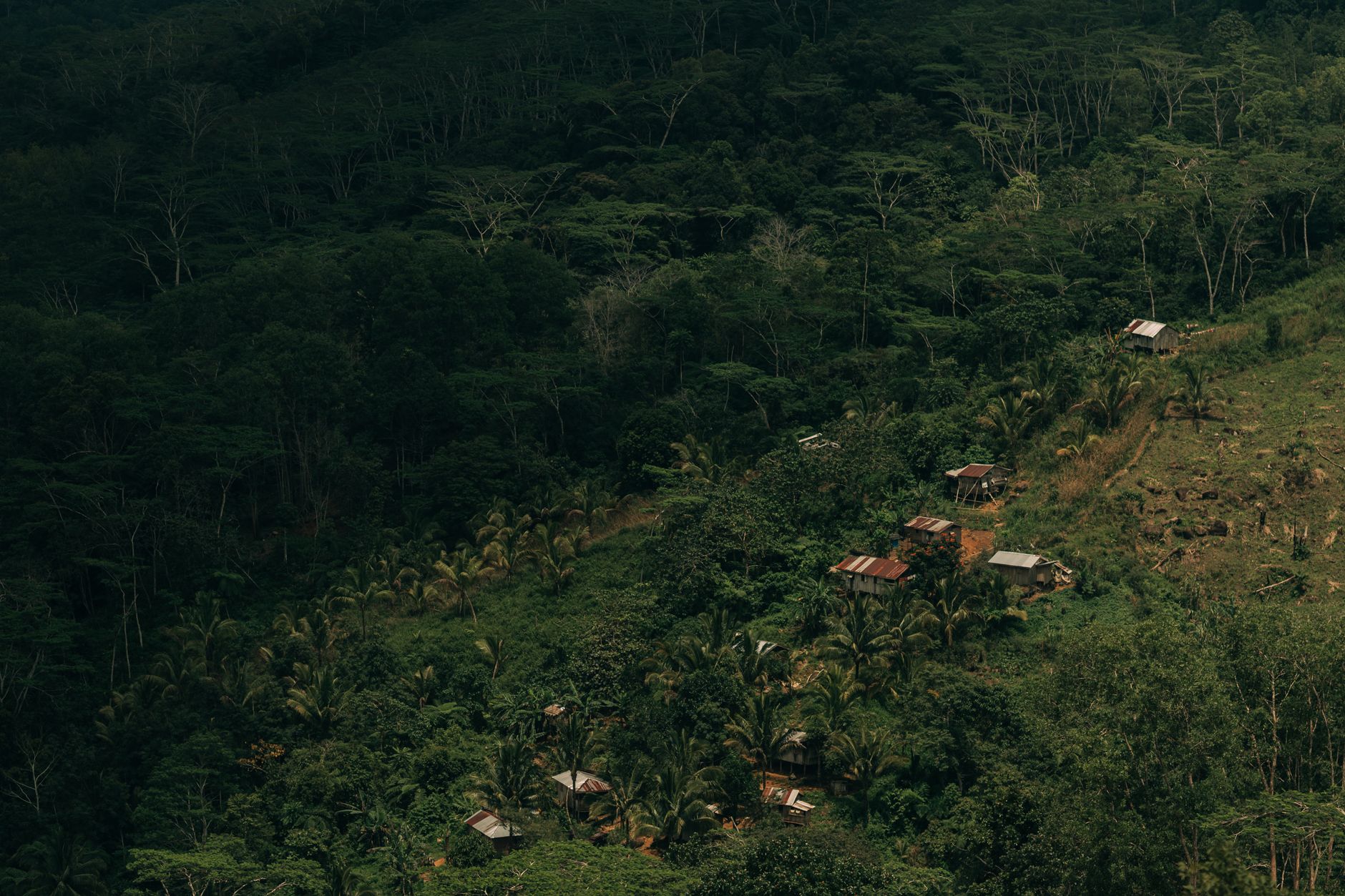
Lowland forest, Philippines — the kind of green the Negros Fruit Dove needs and is rapidly losing.
The data sheet
The Negros Fruit Dove (Ptilinopus arcanus) is unlike almost any bird I keep in my mental ledger, because the whole column of evidence fits on one card:
Taxonomy
Kingdom Animalia → class Aves → order Columbiformes → family Columbidae → genus Ptilinopus → species arcanus. A fruit dove — one of the tribe of soft-green, fruit-eating doves of the Pacific islands.
The single entry
Unlike the sister species, whose ranges fill pages and museum trays, this dove is known from a lone specimen taken in 1953. For an accountant that is the most fragile kind of record: one observation, no corroboration. Some scientists believe the species may already be extinct.
Why it's vanishing
Negros was once cloaked in lowland rainforest. That forest has been almost entirely cleared, converted to sugar cane and settlement. Habitat loss is the whole balance sheet — no columns for hope when the habitat column runs to zero.

A visible cousin — the pink-headed fruit dove. The Negros Fruit Dove itself has all but slipped from view.
The short film
I turned these field notes into a short documentary, narrated in my own accounting-and-watercolor voice: "Extinction is a number falling to zero. We choose the other column."
Why this should matter to a bookkeeper
Extinction is a ledger failure we can't reclassify. Once biodiversity is written off, there is no reversing entry, no restatement. The only ethical journal entry is the one made before the habitat is gone: fund the forest, count what remains, keep the record honest. Conservation is bookkeeping with a longer time horizon than any audit.
Grounded facts via Wikidata (CC0). Sources: Wikidata Q338746 — Ptilinopus arcanus. IUCN taxon ID 22691568. Images via Pexels, royalty-free.